
Cognitive Behavioral Therapy (CBT) is a structured, evidence-based psychotherapeutic approach grounded in the following core principles:
CBT aims to explore the reciprocal relationship between a person’s thoughts, emotions, and behaviors (see Figure 1), supporting individuals in making meaningful changes that align with their personal values and life goals.
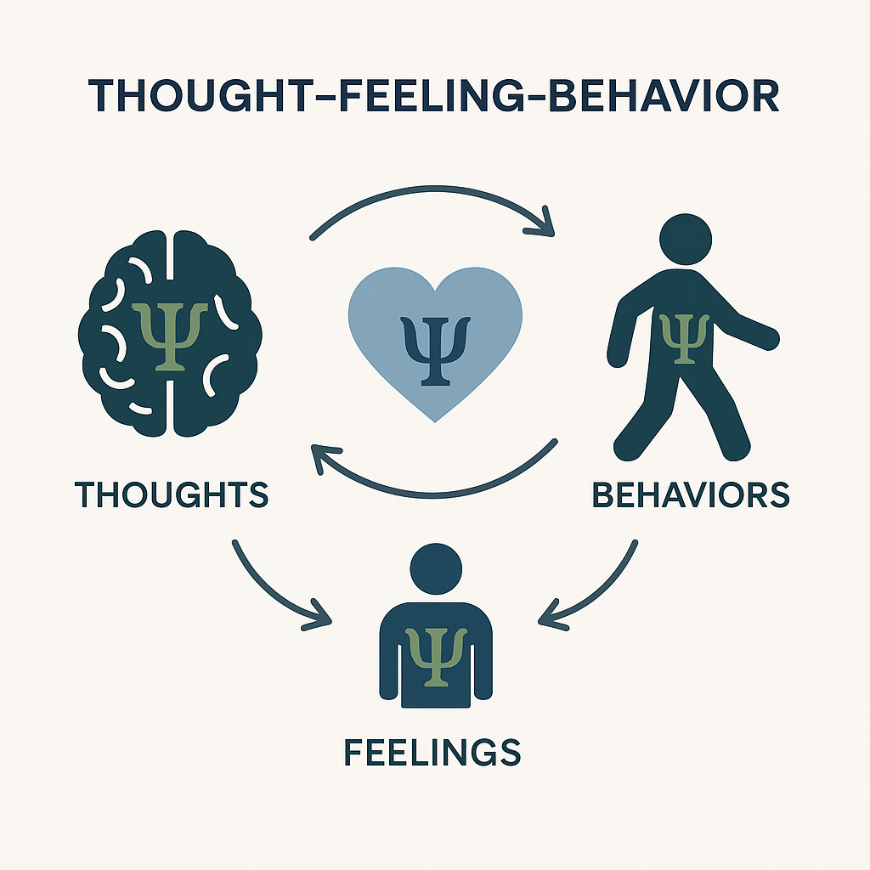
This interconnected cycle is central to CBT and underpins the process of identifying patterns that maintain emotional difficulties.
CBT typically focuses on the here and now and is rooted in a collaborative relationship between therapist and client. The therapist works together with the client to explore their unique experiences and identify practical strategies for change.
Thanks to its structured nature and clear methodology, CBT has been extensively researched. It has demonstrated clinical effectiveness across a wide range of emotional, psychological, and physical difficulties. As a result, CBT offers protocol-driven treatments that can improve outcomes and reduce the duration of therapy.
CBT can be applied:
CBT is typically delivered by trained healthcare professionals (e.g., psychologists, nurses, doctors, social workers, counselors).
Over time, various schools of CBT have evolved, incorporating insights from psychological research and neuroscience. These include:
Each school may place greater emphasis on different elements—thoughts, emotions, or behaviors—but all share the core assumptions described above.
Regardless of the specific model or name, they are all considered forms of CBT.
No matter the variation, all CBT therapists aim to: